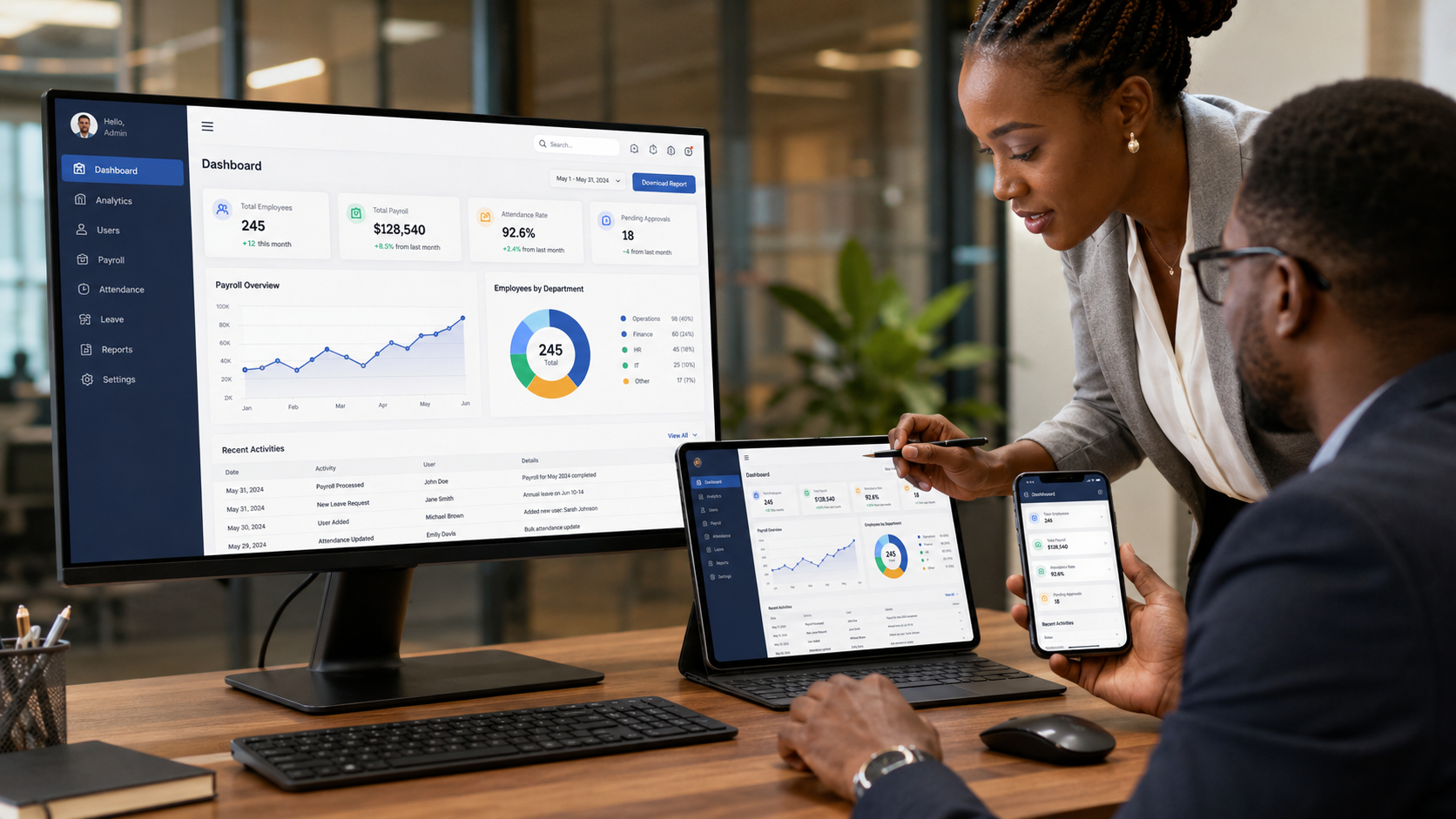
AI can help a payroll team organise exceptions, identify unusual patterns and explain a calculation record. Those tasks are different from deciding what an employee is owed or releasing a payment. A useful adoption plan identifies the exact task being assisted and keeps responsibility for the result clear.
Begin with a process the team already understands. If the underlying employee data, pay rules and approvals are unreliable, adding AI can make errors harder to trace rather than easier to resolve. Establish the existing control framework first, then test whether assistance improves a particular part of it.
Separate rules-based automation from generative AI
A configured payroll engine applies defined calculation rules. A generative model produces text or suggestions from the information it receives and can return an incorrect answer confidently. Treat a model-generated explanation as a draft to verify against the payroll record, not as the authority for a statutory calculation.
Some anomaly checks are better implemented as transparent rules: duplicate bank accounts, a missing identifier or a payment outside an approved threshold. AI may help organise the resulting exceptions or identify additional patterns, but it should not replace a simple control that already works.
Choose useful assistance tasks
- Group payroll exceptions by likely cause for a reviewer to investigate.
- Draft an employee explanation from a verified, limited set of payslip entries.
- Summarise an approved payroll-control checklist for a manager.
- Compare anonymised change descriptions with expected categories.
- Help produce a first draft of procedure documentation for review.
Keep each task bounded. Asking a model to “make payroll compliant” has no clear success criterion. Asking it to classify a prepared exception log into defined categories can be tested against a human-reviewed sample.
Keep the high-impact decisions controlled
Salary changes, employee eligibility, deductions, corrections and bank releases need the approved workflow and accountable reviewers. A suspicious pattern is a reason to ask a question, not a reason to withhold pay or accuse an employee. The reviewer must be able to inspect the evidence and override the suggestion.
When reviewing applicable payroll treatment, use current official guidance, including KRA's PAYE information. Do not assume that a model's answer reflects a recent change simply because its wording sounds precise.
Limit the information sent to the tool
Use synthetic or appropriately anonymised records for initial testing. Do not upload a full salary register to a consumer AI service merely because a file-upload button is available. Review the provider's processing terms, access controls, retention and permitted use of submitted information before considering employee data.
For a real workflow, identify the minimum fields needed and an approved transfer method. A payroll explanation may need verified amounts and categories without needing an identity number, bank account or medical detail. Document who may use the tool and for what purpose.
Measure the full review effort
| Measure | What it tells you |
|---|---|
| Correct exception classifications | Whether the assistance is reliable enough to use |
| False alarms | How much unnecessary investigation it creates |
| Missed issues | Where a control still needs improvement |
| Total reviewer time | Whether drafting time saved exceeds checking time added |
Run a controlled pilot
Test the tool alongside the normal process without allowing it to change payroll or send employee messages automatically. Use a defined sample and keep the human-reviewed answer as the reference. Record errors and their impact, including an apparently helpful explanation that omits a material deduction.
Proceed only when the results support the intended use and the review burden is acceptable. Keep a fallback procedure for an outage or an unsuitable answer. Trinity's AI Workforce Hub and Payroll and HR Operations services can support a practical discussion about where assistance fits within existing controls.